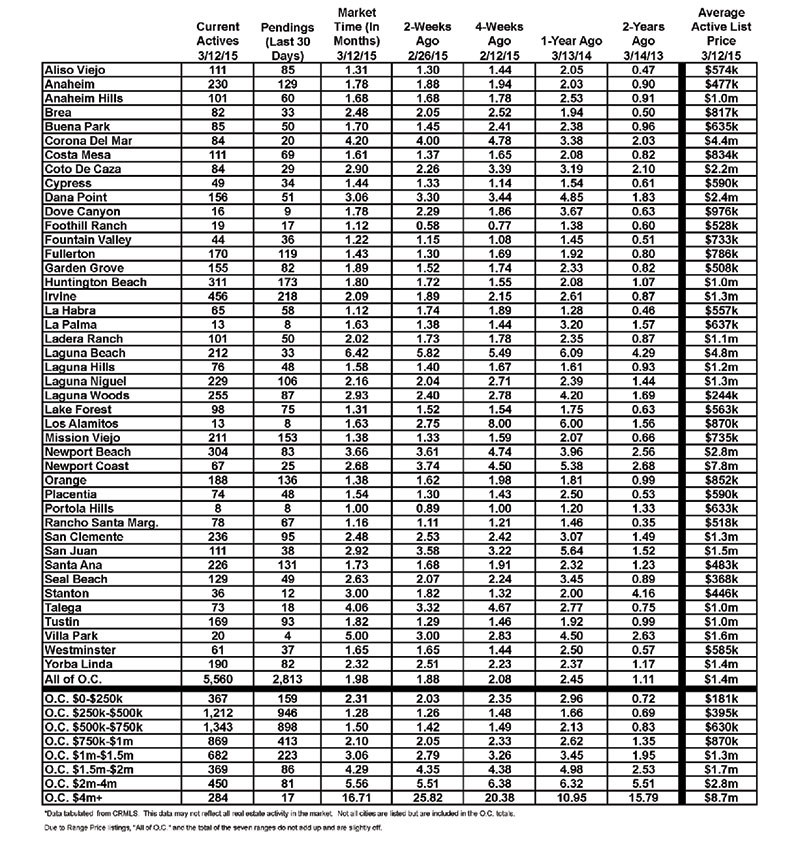
The rapidly appreciating 2012 to 2013 market saw the median price detached homes increase by $194,000 in two years. That’s roughly $8,000 per month. It was all about supply and demand. In 2013, there were less than 3,200 homes on the market and demand was a little bit stronger than today. When there is very little supply (fewer sellers looking to sell) and strong demand (a lot of buyers wishing to buy), prices take off. The commodity, housing, is in short supply and buyers trip over themselves to purchase.
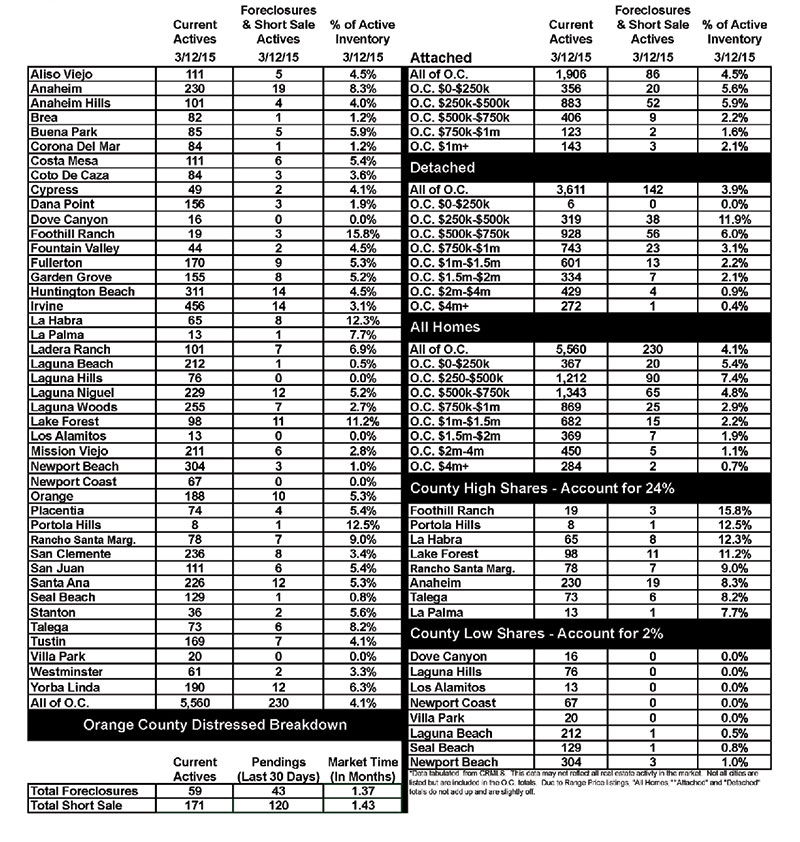
Today, there are more homes on the market, a lot more compared to 2013, 76% more. Even with stronger demand, more supply means that homes will not appreciate as rapidly as they did a couple of years ago. While there are far more buyers than a year ago, there is more of a reluctance to pay too much more than the most recent comparable sale. Buyers are paying a bit more right now, but homes are not appreciating incrementally as fast as before.
You may be confused because everybody, including the local media, is talking about a lack of supply. They are correct, the long term average for the active inventory is about 8,500 homes, a lot more than today. But, what everybody is neglecting to mention is that there is also a lack of buyer demand. The long term average for buyer demand for a year is about 3,000 pending sales in a month. And, that’s an average, meaning the busier time of the year, now, should be a lot higher, about 3,500 pending
sales and growing. The current pace of demand, 2,800, is about 20% off the mark. While it is true that there is a lack of supply, there also is a lack of demand.
It is important for everybody to realize that part of what was fueling the buyer frenzy of the2012 to 2013 market was significantly lower values. In March of 2012, the median sales price for detached homes was $485,000; in December 2014 it was at $683,000. Prices are at levels where there is not much more room for appreciation. Excluding new homes, prices are about 10% off of the pre-recession peak established in 2006. We only got to that peak because of predatorily, aggressive, substandard lending. That sort of lending does not exist today. Buyers have to do a lot more than fog a mirror to get a loan.
Regardless of which side of the fence you sit on, homes just cannot skyrocket in value continuously. Instead, we can expect over time for values to keep up with inflation and maybe even exceed it a bit. That makes a lot more sense. The economy is getting better with consumer confidence up, employment up, and retail spending up, but wages have not yet kept up. From here, it becomes harder and harder to support home price appreciation without incomes rising.
Sellers were getting away with pricing $25,000 more than the most recent comparable sale back in the ’12 to ’13 run-up, but today that is typically a recipe for disaster, a.k.a. “overpriced.” It is being reported that overpriced homes is once again the flavor of the current market as it has been for the past several years now; however, sellers will not get away with this strategy. In spite of hot demand, the active listing inventory is growing. This means that buyers are not biting on grossly overpriced homes. With more homes expected to hit the market with the official start of the spring in about a week, expect the inventory to continue to grow on the backs of overzealous sellers.
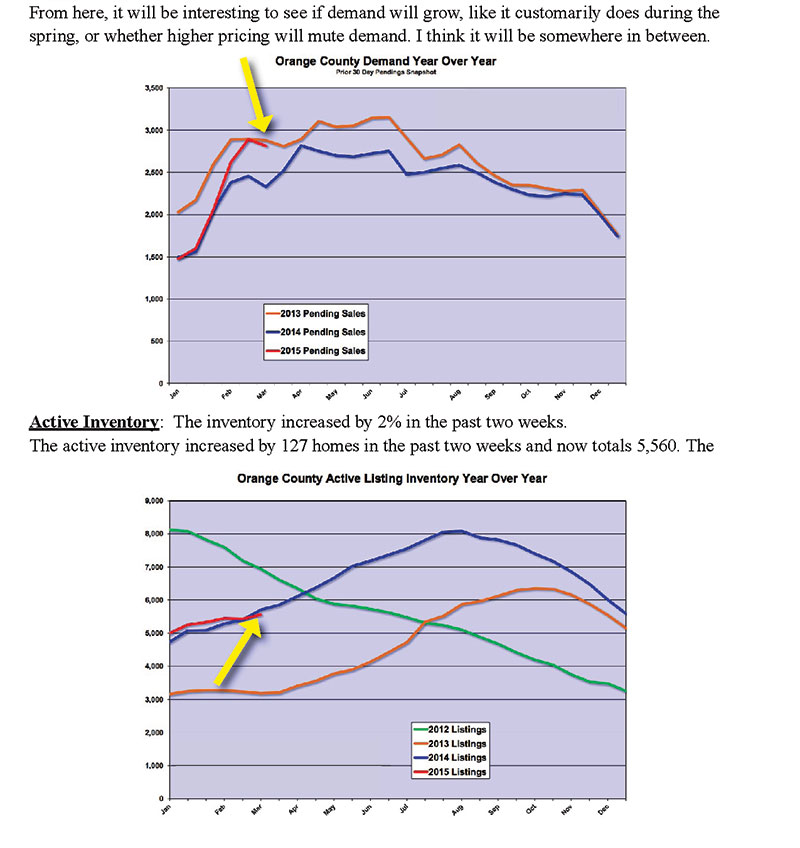
Demand: Demand dropped by 3% in the past two weeks.
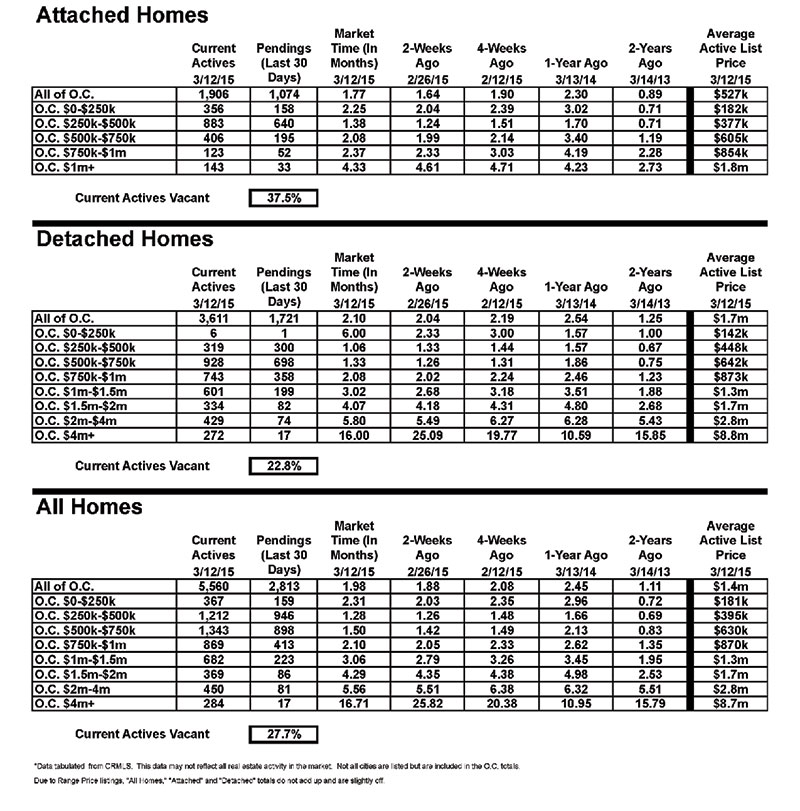
Demand, the number of new pending sales over the prior month, decreased by 78 homes in the past two weeks and now totals 2,813 homes. This is partly due to the fact that February is such a short month. None the less, demand has stalled, which can partially be attributed to pricing and the desire for buyers to pay the Fair Market Value for a home and not some arbitrary value contrived by a seller.
Still, current demand is much stronger than last year and is within 5 pending sales of the 2014 peak reached in mid-April. Last year at this time there were 483 fewer pending sales and the expected market time was at 73 days compared to 59 today.

:format(webp):quality(80)/u.realgeeks.media/hakolas/Facebook.jpg)
:format(webp):quality(80)/u.realgeeks.media/hakolas/GooglePlus.jpg)
:format(webp):quality(80)/u.realgeeks.media/hakolas/YouTube.jpg)
:format(webp):quality(80)/u.realgeeks.media/hakolas/Twitter.jpg)
:format(webp):quality(80)/u.realgeeks.media/hakolas/Zillow.png)